
Amherst County Arrest Warrants Explained
Virginia Code §§ 19.2-71 and 19.2-72 set out who may issue arrest process and on what probable-cause basis. A judge, an authorized clerk, or a magistrate reviews the complaint. The signed process names or describes the accused. It states the offense and directs an officer to arrest. Amherst Police's operations handbook points to those state rules. In Amherst County, though, current law and the order itself still control. A public OCIS result can help you locate a case. It is not the source of probable cause, and it does not display every warrant document.
Amherst County Probable-Cause Review
Issuance comes before any search. A court case lookup cannot answer much until an authorized official has reviewed a complaint or affidavit under Virginia procedure. A public name match in OCIS is not that test. A blank result is not the answer either. It reveals nothing about what a magistrate or court has considered. Residents of Amherst County should use the clerk named in the case papers, or the agency that directed them to a magistrate. When someone other than law enforcement files the complaint, the statute can add authorization steps. Amherst County offers no public web form for an arrest-warrant application. No search box decides whether process issues. The magistrate and the court procedure do, under Virginia Code § 19.2-71 and § 19.2-72, which provide the issuing framework.
Inside an Amherst County Arrest Warrant
The warrant document carries legal fields. OCIS may not show all of them. The public case view instead lists selected court and charge information. Use the court and case identifier to ask the Amherst County clerk which order is filed and whether a later hearing or return appears. A case number is not a warrant number.
| Case reference | CR12345678-90 is an OCIS format example, not an Amherst warrant number. |
|---|---|
| Name or description | The process identifies the accused as required by law; do not publish private identifiers. |
| Offense | The order describes the alleged offense and directs an officer to arrest. |
| Issuing authority | The signed document identifies the authorized judge, clerk, or magistrate. |
| Case and court | Use the Amherst Circuit, GDC, or other court named in the file. |
| Service / return | The officer’s return records service or attempt; it is a separate agency and court record. |
Amherst County Arrest Record Fields
Once process reaches an agency, more detail gets logged. Amherst Police's 2022 administrative handbook describes a local log. It records receipt time, document type, source, assigned officer, service method, attempt location, return date, and reason for nonservice. The law-enforcement record may hold more than a public court view shows. Some fields hold protected or investigative material. That is why a court result can identify the case yet show no service attempts. A narrow records request for policy or a redacted log differs from asking for a live agency hit. Ask the Sheriff or Town Police which record its Amherst County office holds.
Serving Arrest Warrants in Amherst County
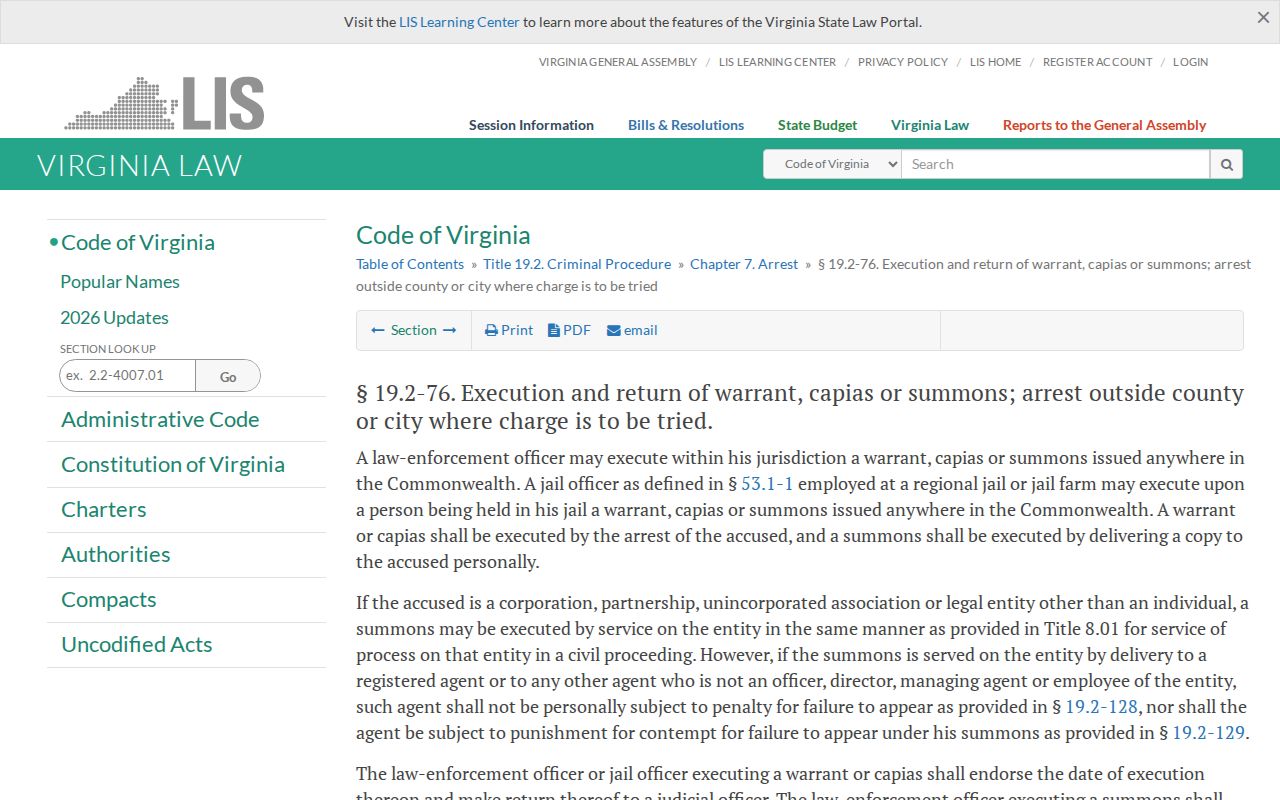
The Amherst County Sheriff's Office is the county law-enforcement contact. Amherst Town Police serves Town process. It can route some papers to the Sheriff or another jurisdiction, and Virginia State Police also supports law enforcement across the state. In Amherst County, the agency that executes a warrant keeps the service information. The court receives the return. It controls the case order. Virginia Code § 19.2-76 covers execution and return of process. If an arrest occurs, confirm booking, bond, and scheduling questions with the arresting agency, the court, or the regional jail. Amherst County runs no public warrant-service counter, appointment process, or bond payment window. Confirm before you travel.
Amherst County Service and VCIN Handoff
The Town Police handbook says unserved felony warrants may go to the Sheriff for VCIN entry within 72 hours when not served right away. It also describes routing papers outside the jurisdiction. That is a 2022 local workflow. Verify current practice with Amherst Police or the Amherst County Sheriff. VCIN and NCIC are agency systems. The public cannot search them. Virginia Code § 19.2-76 sets out execution and return of process.
An execution rule creates no public status page for Amherst County. Ask the issuing clerk about the case order and the serving agency about service.
Comparing Arrest, Summons, and Bench Warrants
Virginia process can direct an arrest, order a person to appear, or respond to a missed court duty. The case and order show which applies. A capias is the term you may meet where you expected a bench warrant. The Amherst bench-warrant overview explains that court-follow-up process for Amherst County.
| Feature | Arrest Warrant | Summons | Bench Warrant |
|---|---|---|---|
| What it orders | Officer to arrest | Person to appear | Arrest after court noncompliance |
| Basis | Probable cause under the statute | Process directing an appearance | Missed setting or court obligation |
| Issuing route | Authorized judge, clerk, or magistrate | Authorized court process | Issuing court |
| Next step | Confirm with clerk and counsel | Attend as directed | Ask the court about hearing or recall |
Amherst County Search Warrants Differ
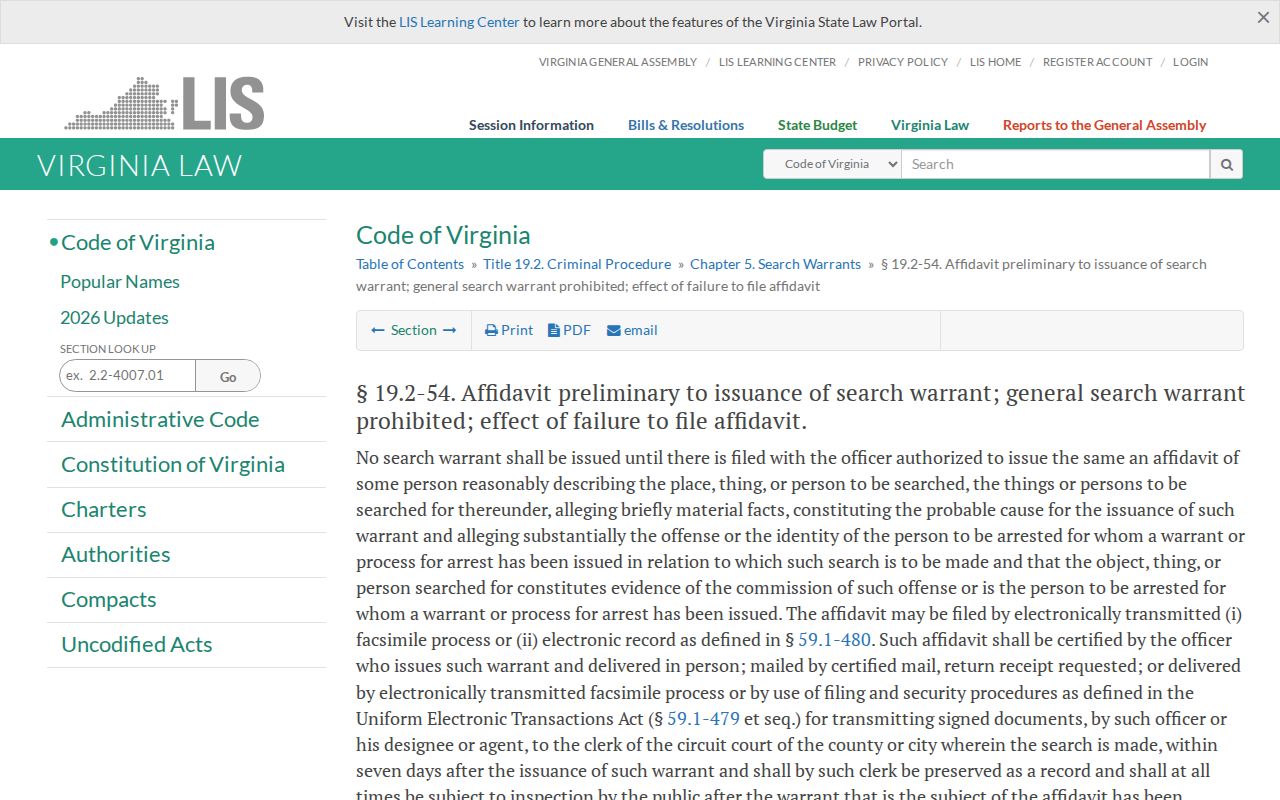
A search warrant authorizes a search for evidence. An arrest warrant directs an officer to take a person into custody. They are separate documents with separate access rules. Virginia Code § 19.2-54 governs filing and access to an executed search-warrant affidavit, though a court can seal it. The statute concerns affidavits, not any Amherst County case. It is not a person lookup. Nor is it a general arrest-warrant roster; Virginia Code § 19.2-54 sets out the affidavit rules.
For Amherst County arrest process, use the court file. Go to the Sheriff or Town Police only when the clerk directs an agency inquiry.
If There's an Arrest Warrant for You
Found yourself named on an Amherst County warrant? Start with OCIS. Note the court and the case number. Once you have those, call the clerk and ask for the current process instruction. If the clerk sends you to an agency, ask the Sheriff or Town Police how their procedure works. A lawyer can weigh a bond, a voluntary surrender, or a motion to recall or quash the warrant. Keep in mind that a phone call cannot change the court's order, and no Amherst source promises a same-day process.
Important: Confirm the issuing court and speak with counsel before appearing; only the authorized court can change or recall its arrest process.
Amherst County Warrant Records at the Clerk
Virginia courts use many forms. The statewide list includes a criminal complaint and specialized warrant documents, but it does not say which form fits an Amherst County case. Ask the clerk. The Amherst County clerk can identify the proper filing route, and counsel can explain the legal choice. Treat the Virginia District Court criminal forms page as a form index. The GDC clerk handles adult misdemeanor and traffic matters. Felony files sit in Circuit Court. A County FOIA request can seek an existing agency policy or a redacted log, though it cannot replace a motion in court. No office here publishes Amherst County filing fees, surrender scheduling, or bond payment methods.